Rugged Beauty
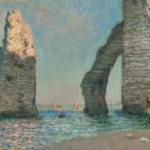
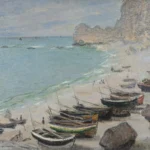
The beach of a charming fishing village, framed by distinctive cliffs: what Claude Monet’s painting captures in the bright colours and loose brushstrokes typical of Impressionism had already inspired the first visitors to Étretat at the end of the 18th century.
In 1883, Monet painted picturesque, colourful fishing boats against the backdrop of the Porte d’Amont. Around the same time, the writer Guy de Maupassant (1850–1893) compared the hump-ridged rock formation of the promontory northwest of Étretat to a “giant elephant dipping its trunk in the sea”.
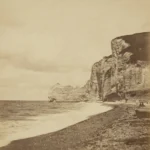
The mighty chalk cliffs have fascinated generations of artists: almost a century before Monet painted this picture, the first artists found their way to the remote coastal village. Their depictions of Étretat and its surroundings, produced at the end of the 18th century, heralded a cultural change: the experience of nature – the awed wonder at the beauty of the landscape – became a driving force behind making and appreciating art.
“I felt a strong desire to examine those works of Nature from above.”
Beautiful Rock
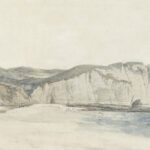
It is as if the artist Alexandre Jean Noël (1752–1843) had come to a sudden halt to take in a majestic view he had stumbled across of the Porte d’Aval, southeast of Étretat. The drawing from 1786 reveals a keen interest in the structural quality of the rock formations and the beauty of the coastal landscape.
First Image
Noël’s drawing is thought to be the earliest extant depiction of the bay of Étretat. In the 1780s, the small fishing village was still largely unknown by people from the city. For centuries, the forbidding northern coast had aroused more fear than curiosity.
Oyster Beds
Oyster beds can be seen in front of the Porte d’Aval rock. The much sought-after bivalves were matured in Étretat over several months and delivered to Paris overnight by horse-drawn cart. In fact, the drawing was anything but spontaneous and was commissioned by an oyster merchant for advertising purposes. Before the French Revolution, he spread the rumour that his seafood was consumed by none other than Marie-Antoinette herself.
A World in Transition
A time of momentous changes: over the course of the 19th century, the Industrial Revolution reshaped the social structures of Europe. As science and technology revolutionised many areas of life, people began to travel to and survey remote regions of the continent. At the same time, there was a growing desire to escape certain aspects of the newly industrialised world: the private experience of culture and nature increasingly came to be seen as a means of dreaming, relaxing and getting away from the deep social and political divisions of contemporary France. Since the French Revolution, republican and pro-democratic forces had been pitted against supporters of the monarchy, giving rise to several violent conflicts and failed coups. The proclamation of Napoleon III as emperor in 1852 (r. 1852–1870) marked the return of an authoritarian, monarchical state order.
Inspiring Views
Soaring cliffs and the roar of the sea – the natural spectacle of Étretat started attracting artists from all over Europe in the 1820s. The breathtaking coastline resonated with the zeitgeist and inspired awe, wonder and artistic creativity.
Picturesque Voyages
Picturesque Voyages
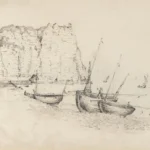
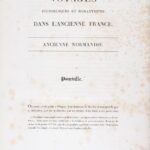
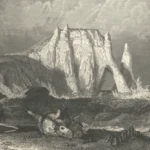
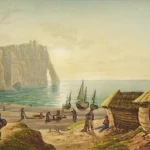
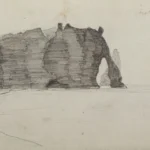
In the digital age, printed travel guides may seem a thing of the past – but in the early 19th century, they were just starting to enjoy a wide readership, with content that would be familiar to us today. Highly ambitious publications such as Voyages pittoresques had begun compiling the sights of France in the 1820s. As a result, hitherto obscure locations in Normandy were discovered as worthwhile and educational travel destinations. More and more people who could spare the time and money began taking a keen interest in exploring the cultural history and natural beauty of remote corners of Europe. In 1835, for example, the celebrated writer Victor Hugo (1802–1885) and his lover, the actress Juliette Drouet (1806–1883), travelled from Paris to Étretat – undeterred by the discomfort of what was then a two-day journey by stagecoach!
“What I saw at Étretat was admirable. (…) The [rock formation] is the most gigantic piece of architecture there is.”
He is credited with “discovering” Étretat: the Romantic marine painter Eugène Isabey (1803–1886) is thought to be the first artist to have spent any length of time in the coastal village, lodging with a former coastguard captain, around 1820. The successful painter played an important role in the growing popularity of the coastal destination.
“One of the first strangers to visit this area was undoubtedly Monsieur Isabey, the famous marine painter.”
Marine Painter
Eugène Isabey was an immensely successful artist: during the July Monarchy (1830–1848), he was appointed court painter to King Louis-Philippe I, made a Knight and later an Officer of the French Legion of Honour. His focus on marine subjects – paintings of ships, cliffs and the open sea – was something he had inherited from his father, himself an influential artist and illustrator of Voyages pittoresques. The sea and coastal areas – along with overseas countries and foreign cultures – were particularly popular subjects in the 19th century. This cultural fascination went hand in hand with hard political realities: French foreign policy was fuelled by the desire for colonial expansionism and imperialism, which also had a direct impact on Eugène Isabey’s life. In 1830, the artist accompanied the French Invasion of Algiers. His depiction of the landing of troops on the Sidi-Fredj peninsula documents the start of French colonial rule in North Africa.
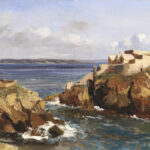
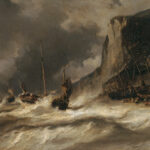
Isabey made his name with impressive views of the sea and coast. His Romantic paintings are full of pathos and drama. Romantic art reflects the sense of awe in the face of the mighty forces of nature.
Awe and Wonder
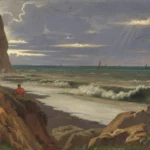
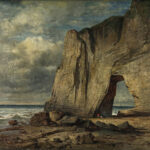
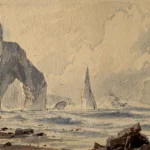
Awe and Wonder
Mysterious, ancient rocks and the vast expanse of the ocean: Romantic paintings often convey a sense of overwhelming grandeur or immensity. Philosophers, writers and artists had been fascinated by this phenomenon since the mid-18th century. They used the term “sublime” to describe the humbling aesthetic force of something so great that it transcends the boundaries of the familiar and comprehensible evoking a thrilling sense of awe. Influential thinkers – from Edmund Burke to Immanuel Kant and Friedrich Schiller – agreed that it was this intense thrill of the sublime that allowed the individual to truly become aware of their place in the world.
“The wonders of the bold creation that the sea had wrought here, tearing rock from rock, shook my soul.”
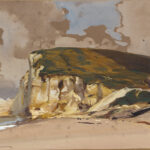
Awestruck views of the cliffs by the sea: Of particular note among Eugène Isabey’s numerous paintings of Étretat are his delicate watercolours. Circling the rock formations with a probing, inquiring gaze, the artist conveys his wonder at the mysteries of the visible world.
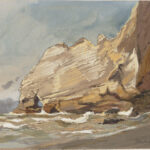
Geological History
The cliffs of Étretat rise to a height of between 75 and 84 metres! They were formed around 90 million years ago, in the Middle Cretaceous period, from the deposits of marine organisms: dark bands of hard flint run through the soft limestone walls. Tectonic forces – movements of the Earth’s crust – lifted the Normandy cliffs around two million years ago. The unique rock formations are the result of several interactive processes, ranging from the impact of sediment-laden waves to sudden temperature fluctuations and the weathering and erosion of the cliffs. In the 19th century, their striking appearance and geological origins captivated not only artists but also the world of science: the cliffs were mentioned in numerous non-fiction books and became a subject of study in the emerging disciplines of geology and mineralogy.
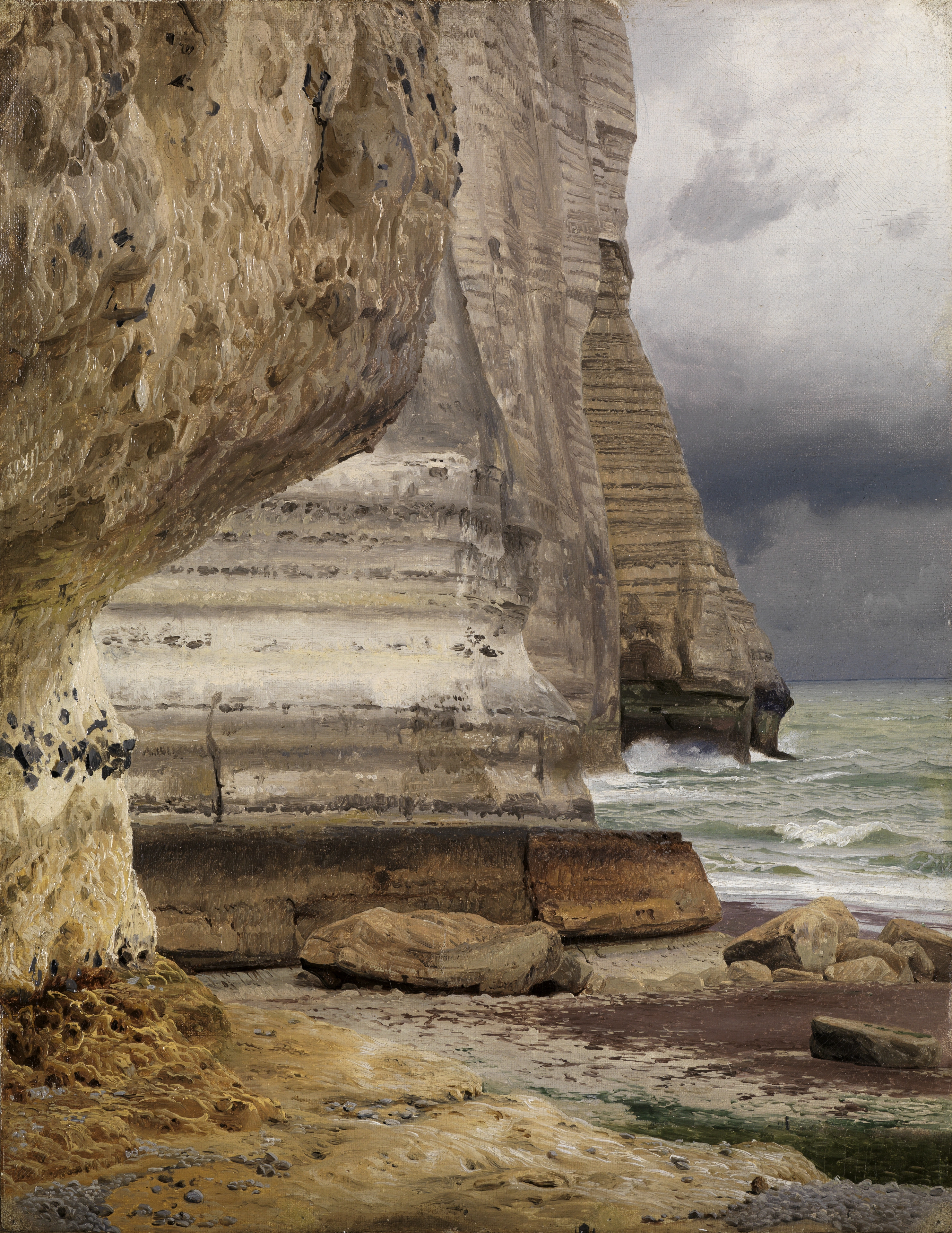
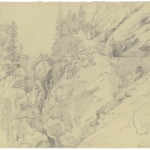
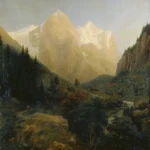
Artists approached the distinctive coastal landscape with a sense of wonder and intellectual curiosity: in 1836, the German painter Johann Wilhelm Schirmer (1807–1863) produced oil studies of the rocky coastline at Étretat. His paintings combine precise observation with a romanticised exaltation of what he saw. Even today, it is difficult to resist their stirring allure.
Romantic Artist
The cliffs of the Atlantic coast and the towering peaks of the Alps: Johann Schirmer was always on the lookout for spectacular landscapes. During his time as an assistant teacher – before he was appointed professor at the Düsseldorf Art Academy in 1839 – he travelled extensively throughout Europe, including a trip in 1836 from the Bernese Alps to Étretat and back. Schirmer worked en plein air – drawing and sketching outdoors in oils and watercolours, which allowed him to capture the immediacy of his response to nature. He used his studies when teaching students and as models for his monumental studio paintings of landscapes. Schirmer’s opulent paintings also found favour in France: in 1838 he was awarded a gold medal at the Paris Salon – arguably the most important annual art exhibition in Europe at the time.
“Étretat is an inexhaustible gold mine for painters. It is a veritable California that fills artists’ scrapbooks.”
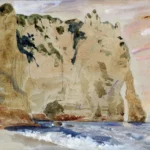
The most celebrated artists of the time were drawn to Étretat: in the 1840s, the influential French painter Eugène Delacroix (1798–1863) – a friend of Eugène Isabey – sketched the rock arches. His watercolour study of the Porte d’Aval translates the impression of nature into a processual, modern painterly idiom.
It is the harmony of colours that makes this landscape study so atmospheric. The artist’s use of varied brushstrokes reinforces the viewer’s sense that this is a highly personal, “felt” response to the evening mood. Delacroix’s brush drawing would later catch the eye of Claude Monet, who bought it for his own art collection in 1891. Perhaps he saw his predecessor’s work as a harbinger of Impressionism.
“I am crazy about the coast and the sea.”